
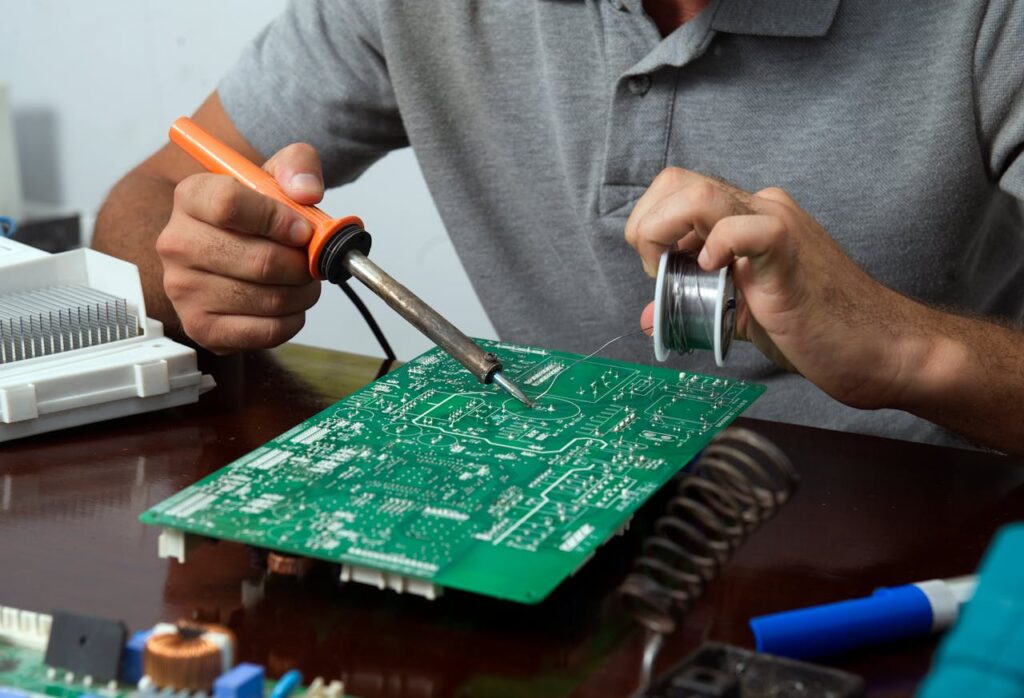
An aspiring electronic entrepreneur is someone who wants to build a business by creating or selling electronics—things like custom gadgets, repair services, hobbyist kits, audio gear, smart-home add-ons, or small-batch circuit products. The exciting part is obvious: you get to make something real. The tricky part is also obvious: it’s easy to drown in parts, ideas, and “almost ready” prototypes.
The quick read you’ll actually use
- Pick a customer and a pain point before you pick a feature set.
- Your first “version” can be ugly, as long as it’s safe and works.
- Momentum comes from tiny launches: a preorder page, a pilot run, a local sale, a repair client, a small wholesale order.
Choose your lane
- Product builder: you design and sell a device (or a small module)
- Assembler/customizer: you build configured versions of existing components
- Repair & diagnostics: you fix, refurbish, and resell or provide service
- Kits & learning: you sell DIY kits, workshops, or classes
- Parts sourcing: you curate hard-to-find components for a niche
From idea to first sales (no heroics required)
“I help (who) achieve (result) by (electronics thing).”
Photos, steps, common issues. This becomes your operations playbook and marketing fuel.
The numbers that matter early
Metric | Why it matters | A simple target |
Unit cost (parts + packaging) | Prevents surprise losses | Know it within 10% |
Build time per unit | Reveals scaling limits | Track every build |
Defect/rework rate | Quality and reputation | Reduce each batch |
Time to first customer response | Under 48 hours | |
Cash runway | Keeps you alive | 2–3 months buffer |
Don’t skip the boring stuff: structure keeps creativity alive
What to prepare before you scale past “side project”
- A clear product description (one paragraph, no jargon)
- A bill of materials (even if it’s rough)
- A repeatable build process (at least a simple checklist)
- Basic safety considerations (heat, power, enclosures, wiring strain relief)
- Returns/repairs plan (what you will and won’t cover)
- A way to collect payments and track expenses
- One channel you’ll commit to for customer acquisition (marketplace, local shops, social, email, events)
Getting customers without becoming a full-time marketer
- Local repair demand and referrals
- Niche communities (audio, RC, cosplay, home automation)
- Small retailers that want a unique product
- Events: maker fairs, swap meets, pop-ups
- B2B micro-contracts (custom assemblies, test fixtures, small runs)